Dr Zool HilmiNuclear Medicine & Theranostics in Malaysia.
We treat what we see.We see what we treat.
Head & Consultant in Nuclear Medicine at Tunku Laksamana Johor Cancer Centre in Johor Bahru, with specialist fellowship training in Germany and the United States. Dedicated to advancing PET/CT, SPECT/CT and targeted radionuclide therapy for patients.
Current appointmentHead & Consultant, Nuclear MedicineTunku Laksamana Johor Cancer Centre
From Suspicion to Diagnosis: A Practical Approach to Cancer in Primary Care
A practical cancer education evening for general practitioners with Tunku Laksamana Johor Cancer Centre (TLJCC) and the Malaysian Medical Association (MMA), Johor Branch. The programme brings together cancer screening and diagnosis, nuclear medicine in patient management, and tumour markers.
Tunku Laksamana Johor Cancer Centre (TLJCC)Larkin, 80350 Johor Bahru, Johor, Malaysia
Three perspectives on cancer care
01
Screening, Prevention and Diagnosing Cancer
Dr Mohd Roslan HaronConsultant Clinical Oncologist & Medical Director, TLJCC
02
Dr Zool Hilmi’s session
Beyond the Scan: How Nuclear Medicine Changes Patient Management
Dr Zool Hilmi Bin AwangConsultant Nuclear Medicine Physician, TLJCC
03
Tumor Marker in Cancer Management
Ms Low Yoke LeeMedical Laboratory Expert
Evening programme
6.30pm
Registration and dinner reception
7.30pm
Welcome address by Dr Prabha Shanti Subramaniam, Chairman, MMA Johor Branch
7.40pm
Introduction by the chairperson, Dr Mohd Roslan Haron
7.50pm
Screening, Prevention and Diagnosing Cancer — Dr Mohd Roslan Haron
8.30pm
Beyond the Scan: How Nuclear Medicine Changes Patient Management — Dr Zool Hilmi Bin Awang
9.15pm
Tumor Marker in Cancer Management — Ms Low Yoke Lee
10.00pm
Programme ends
Consultant at TLJCC
A new centre for integrated cancer care in Johor.
Tunku Laksamana Johor Cancer Centre (TLJCC) was officially launched in December 2025 following 18 months of planning and construction. Located in Larkin, Johor Bahru, the specialist centre was named in honour of the late Tunku Abdul Jalil Ibni Sultan Ibrahim and was established to carry forward his wish to ease the suffering of people affected by cancer.
TLJCC brings cancer diagnosis, advanced imaging and treatment together through coordinated multidisciplinary care. It forms part of a wider development planned to include a dedicated nuclear medicine centre with a cyclotron and a 200-bed hospital—supporting more accessible precision imaging and theranostic treatment for Johor and beyond.
Introducing Tunku Laksamana Johor Cancer Centre and its vision for advanced, compassionate cancer care.
Latest activity · August 2026
Installation of the United Imaging uMI Panvivo PET/CT at TLJCC.
The installation of the new uMI Panvivo PET/CT marks an important step in developing advanced molecular imaging services at Tunku Laksamana Johor Cancer Centre. The system will support high-quality oncologic imaging, clinical precision and an integrated patient pathway.
System installationuMI Panvivo PET/CT · TLJCC
Arrival and positioning of the PET/CT system
The TLJCC development journey
A four-phase vision for integrated cancer care.
TLJCC is being developed in planned phases—from ambulatory diagnosis and outpatient treatment to local radiopharmaceutical production, a comprehensive cancer hospital and dedicated healthcare for older adults.
Phase 01Ambulatory Cancer Centre · 2026
Advanced diagnostics and outpatient cancer care under one roof.
The Ambulatory Building brings together advanced imaging, specialist consultation and day-care cancer treatment in a coordinated outpatient setting. This first phase is designed to make assessment, treatment planning and ongoing care more convenient for patients and their families.
Advanced imagingUnited Imaging PET/CT, 3-Tesla MRI and CT simulation
Diagnostic servicesUltrasound, diagnostic X-ray and digital mammography
Consultant clinicsDedicated rooms for multidisciplinary specialist review
Oncology day careOutpatient cancer treatment and supportive care
Molecular imaging
United Imaging PET/CT
High-quality oncologic molecular imaging for detection, staging, treatment planning and response assessment.
Magnetic resonance imaging
3-Tesla MRI
High-resolution anatomical and functional imaging to support comprehensive cancer assessment.
Radiotherapy planning
CT Simulator
Precise imaging and patient positioning for individualised radiotherapy planning.
Specialised X-ray imaging
Senographe Pristina Digital Mammography
Dedicated breast imaging within the centre's broader diagnostic pathway.
Planned 20 MeV medical cyclotron · Phase 2
Phase 02Planned for 2027 · Insya-Allah
A 20 MeV cyclotron and GMP radiopharmaceutical facility.
TLJCC plans to establish a 20 MeV medical cyclotron to produce short-lived PET radiopharmaceuticals locally. The facility is intended to support patients at Tunku Laksamana Johor Cancer Centre and supply hospitals that require a dependable regional source.
¹⁸F-FDGOncology and clinical PET imaging¹⁸F-PSMAProstate cancer molecular imaging¹⁸F-DOTASomatostatin-receptor molecular imaging
GMP ambition. TLJCC aims to develop a potentially first-of-its-kind Malaysian GMP production capability for ¹⁸F-DOTA and ¹⁸F-PSMA. The final production scope and supply network will remain subject to tracer validation, regulatory approval, licensing and operational readiness.
TLJCC Four-Phase Vision for Integrated Cancer CareOne integrated pathway from ambulatory diagnostics and outpatient treatment to nuclear medicine production, comprehensive hospital care and healthcare for older adults.
Future phases, timelines, radiopharmaceuticals and clinical services are planned developments and remain subject to regulatory approvals, licensing, procurement, validation and operational readiness.
Tunku Laksamana Johor Cancer Centre
The pioneer clinical team shaping a new chapter in cancer care.
Four clinicians from complementary specialties are helping lead the opening and early clinical development of Tunku Laksamana Johor Cancer Centre (TLJCC) in Johor Bahru. Together, the founding team brings oncology, radiology, nuclear medicine and emergency care into one multidisciplinary pathway—from diagnosis and imaging to treatment, theranostics and acute patient support.
From left: Dr Mohd Roslan Haron, Dr Hema Kaliparumal, Dr Zool Hilmi and Dr Alia Fadhla.
Medical Director & Clinical Oncology
Dr Mohd Roslan Haron
Medical Director and senior Clinical Oncologist at TLJCC, supporting the centre's clinical leadership and comprehensive cancer assessment and treatment. His published professional profile lists qualifications in medicine and clinical oncology from Cairo and the United Kingdom.
Radiology
Dr Hema Kaliparumal
A Radiologist contributing diagnostic imaging expertise to cancer detection, staging, treatment planning and response assessment. The Malaysian Medical Council lists TLJCC as her principal place of practice for 2026.
Nuclear Medicine
Dr Zool Hilmi
Head and Consultant in Nuclear Medicine, developing TLJCC's molecular imaging and theranostic services, including PET/CT, SPECT/CT and targeted radionuclide therapy.
Accident & Emergency
Dr Alia Fadhla
A Medical Officer in Accident & Emergency, supporting timely assessment, stabilisation and coordination of care when patients require urgent clinical attention.
Patient education
Explore specialist-reviewed guides.
Dedicated resources on molecular imaging and targeted radionuclide therapy, written for patients and families in Malaysia.
Dr Zool Hilmi Bin Awang is Head & Consultant in Nuclear Medicine at Tunku Laksamana Johor Cancer Centre. He holds a Master of Medicine in Nuclear Medicine from Universiti Sains Malaysia, and his work spans diagnostic molecular imaging, targeted radionuclide therapy and the development of new nuclear medicine services in Malaysia.
He completed a Theranostic Nuclear Medicine fellowship in Bad Berka and University Hospital Bonn, Germany, followed by nuclear medicine therapy training at MD Anderson Cancer Center, Texas.
Nuclear medicine, PET/CT and theranostics in Johor Bahru.
Dr Zool Hilmi is a Consultant Nuclear Medicine Physician (Pakar Perunding Perubatan Nuklear) based in Johor Bahru, Malaysia. His clinical work connects advanced molecular imaging with personalised, targeted radionuclide therapy.
Specialist focus: PET/CT and SPECT/CT imaging, PSMA theranostics, targeted radionuclide therapy, PRRT and radioactive iodine treatment.
01
Molecular imaging
PET/CT and SPECT/CT for oncologic imaging, treatment planning and precision assessment of disease.
02
Theranostics
Clinical and service-development experience in Lu-177 PSMA, PRRT, Y-90 SIRT and other targeted radionuclide therapies.
03
Radioactive iodine
Specialist assessment and patient education for I-131 treatment in thyroid disease, with individualised safety guidance.
Clinical suitability and service availability must be confirmed directly with the treating Nuclear Medicine team.
Selected milestones
Building services that move care forward.
2021—2026
01
Thomson Hospital Kota Damansara
Established and led the Nuclear Medicine Department
Appointed Head of Nuclear Medicine in 2021, Dr Zool Hilmi helped establish the department and develop an integrated service for molecular imaging and theranostic treatment. The pictured multidisciplinary team later marked Thomson Hospital's Australian accreditation for its cancer services in 2023. He completed this chapter in 2026 before joining TLJCC.
Department LeadershipService DevelopmentMultidisciplinary Care
2020
02
Institut Kanser Negara (IKN)
Pioneered Lutetium-177 PSMA therapy
As coordinator for a new service at IKN, Dr Zool Hilmi initiated Lutetium-177 PSMA therapy for metastatic castration-resistant prostate cancer in 2020—expanding access to targeted radioligand therapy for patients in Malaysia.
Lu-177 PSMATheranosticsProstate Cancer
2022
03
Advanced hybrid imaging
First Mediso 3-in-1 PET/SPECT/CT user in Asia
Dr Zool Hilmi was the first user in Asia of the Mediso three-in-one PET/SPECT/CT platform—bringing PET, SPECT and CT capabilities together in one advanced hybrid imaging system. He also completed dedicated AnyScan PET/SPECT/CT training in Hungary in 2022.
Mediso AnyScanHybrid ImagingPET/SPECT/CT
Education & clinical focus
A medical journey shaped across Malaysia, Indonesia, Germany and the United States.
01
PET/CT & SPECT/CT
02
PSMA Radioligand Therapy
03
PRRT
04
Selective Internal Radiation Therapy
05
Theranostic Nuclear Medicine
Medical student record portraitUniversitas Hasanuddin graduation book · 2002
Makassar, Indonesia · 1996—2002
Where the medical journey began.
In 1996, Dr Zool Hilmi joined the pioneering Malaysian medical student cohort at Universitas Hasanuddin in Makassar, Indonesia. At that time, Malaysian students were sent through a government-to-government pathway to a small group of Indonesian universities recognised for medical training.
Studying medicine away from home demanded adaptability, discipline and cultural openness. The programme brought together foundational medical sciences and clinical apprenticeship within Indonesia's medical education system. Dr Zool Hilmi completed the full six-year journey from 1996 to 2002 and received his basic medical degree—Doctor of Medicine (MD).
Cum LaudeGPA 3.68 · Graduated 14 December 2002
This formative experience laid the foundation for his subsequent Master of Medicine in Nuclear Medicine in Malaysia and advanced theranostic training in Germany and the United States.
DE
Germany
Fellowship in Theranostic Nuclear Medicine (Oncology), Bad Berka and University Hospital Bonn · 2017
US
United States
Nuclear Medicine Therapy training, MD Anderson Cancer Center, Houston, Texas · 2019
MY
Malaysia
Master of Medicine (Nuclear Medicine), Universiti Sains Malaysia · 2009
2009—2013 · MalaysiaMaster of Medicine in Nuclear Medicine
Postgraduate training at Universiti Sains Malaysia and Hospital Kuala Lumpur.
2017 · GermanyTheranostic Nuclear Medicine Fellowship
Clinical fellowship in PRRT, radioligand therapy, SIRT and Xofigo at Bad Berka and University Hospital Bonn.
2017 · GermanyLearning with international experts
Advanced theranostic oncology training under Professor Richard P. Baum and Professor Hojjat Ahmadzadehfar.
2019 · Houston, USAMD Anderson Cancer Center
Regional training course on targeted radionuclide therapy.
Research & peer-reviewed work
Malaysian evidence with international reach.
Published and educational work by Zool Hilmi Awang, Awang ZH and Z.H. Awang, spanning nuclear cardiology, infection imaging, theranostic oncology, radioactive iodine, PSMA radioligand therapy, radioimmunotherapy and sentinel lymph node imaging.
Open the featured posters and article pages in full size, or select a journal link to read its official record.
Berita MMA · February 2022Featured medical writing
Making precision medicine understandable
Theranostic Nuclear Medicine in Oncology: A Malaysian Perspective
Written by Dr Zool Hilmi for Berita MMA, this three-page feature introduces a defining idea in nuclear medicine: “we see what we treat and treat what we see.” Molecular imaging identifies a biological target, and a paired radioactive treatment can then deliver radiation more selectively to disease expressing that target.
The article brings together established and emerging Malaysian applications: radioiodine for differentiated thyroid cancer, MIBG for selected neuroendocrine tumours, somatostatin-receptor imaging and PRRT, PSMA radioligands for prostate cancer, Y-90 hepatic radioembolisation, and radionuclides used to palliate painful bone metastases.
See the targetSPECT or PET demonstrates whether disease takes up a relevant radiotracer.
Select with purposeImaging can support patient selection, treatment planning and response assessment.
Treat preciselyA therapeutic radionuclide delivers radiation to target-positive tissue under specialist care.
Balanced perspective: theranostics is not suitable for every cancer or every patient. Access to technology, regulatory approval, expertise and sustainable financing remain important considerations.
Outcome of Iodine-131 Therapy for Hyperthyroidism in Hospital Kuala Lumpur
This thesis poster by Dr Zool Hilmi Bin Awang, Dr Lee Boon Nang and Prof. Dr Ibrahim Lutfi Shuaib examined outcomes after a single dose of radioactive iodine (I‑131) for patients with hyperthyroidism treated at Hospital Kuala Lumpur.
I‑131 is taken up by overactive thyroid tissue and emits radiation over a short tissue range, gradually reducing excessive hormone production. The treatment aims to control hyperthyroidism; some patients subsequently develop an underactive thyroid and require lifelong thyroid-hormone replacement.
18.7%euthyroid
24.3%hypothyroid
57%remained hyperthyroid
The study enrolled 109 patients and assessed thyroid status six months after treatment. The poster reported no statistically significant association between outcome and the demographic or clinical factors examined. Its conclusion noted that the administered activity was often too low to achieve euthyroidism or hypothyroidism, and recommended improving assessment, iodine-diet preparation, treatment-dose selection and diagnostic classification.
How to read these findings: this is a historical 2013 thesis dataset, not an individual treatment recommendation. I‑131 dosing, follow-up and treatment goals should be personalised by the treating nuclear medicine and endocrine teams using current clinical guidance.
From pioneering treatment to publishing Malaysia's own clinical evidence.
This scientific poster presents a Malaysian single-centre report describing real-world treatment outcomes and the safety profile of [¹⁷⁷Lu]Lu-PSMA-617 radioligand therapy in patients with metastatic castration-resistant prostate cancer (mCRPC).
The poster reports data from patients treated at Thomson Hospital Kota Damansara between January 2020 and March 2024. It places Malaysian clinical experience on the scientific record and supports the continued development of precision radioligand therapy locally.
10patients studied
2020—2024real-world treatment data
60%recorded a PSA decrease above 50%
A contribution to nuclear medicine in Malaysia: a local scientific record of real-world Lu-177 PSMA-617 treatment outcomes and safety.
Authors Nur Syazana Ab Rahman · Muhamad Faiz Othman · Zool Hilmi Awang
These infographics summarise the official IAEA MUGA contribution and the 2017 dual-tracer infection-imaging short communication. Each visual links back to its primary source.
Underutilization of MUGA Study at Sarawak General Hospital, Malaysia
A visual guide to the standard MUGA workflow, its quantitative cardiac-function outputs, the official conference record and the boundary between verified metadata and unpublished study results.
Differentiating Osteomylelitis from Charcot Joint by Using Sulphur Colloid and Besilosomab (Scintimun®) Scan
The diagram shows the dual-tracer principle, acquisition protocol, findings from both cases, management impact and the important limitation that this was a preliminary two-case report.
Radioligand therapy of metastatic castration-resistant prostate cancer: current approaches
Zool Hilmi Awang · Markus Essler · Hojjat Ahmadzadehfar
Article overview
A clinical review of PSMA-targeted radioligand therapy for advanced prostate cancer, covering lutetium-177 and actinium-225 approaches, dosimetry, response and toxicity.
Predictors of overall survival in metastatic castration-resistant prostate cancer patients receiving [¹⁷⁷Lu]Lu-PSMA-617 radioligand therapy
Hojjat Ahmadzadehfar · Stephan Schlolaut · Rolf Fimmers · Anna Yordanova · Stefan Hirzebruch · Carl Schlenkhoff · Florian C. Gaertner · Zool Hilmi Awang · Stefan Hauser · Markus Essler
Article overview
An analysis of 100 patients receiving 347 treatment cycles that identified clinical, laboratory and early PSA-response factors associated with overall survival.
Journal of Nuclear Medicine & Radiation Therapy2017
Short communication
Differentiating Osteomylelitis from Charcot Joint by Using Sulphur Colloid and Besilosomab (Scintimun®) Scan at Sarawak General Hospital
Zool Hilmi Bin Awang · Anthony Louis Kindu · Nadiah Abd Razak · Wan Muhd Anas Bin Wan Hussain · Saieehwaran Menon · Nurul Nadiah Zulkifli
Article overview
A two-case short communication on combined 99mTc-Sulphur Colloid and 99mTc-Scintimun imaging to support differentiation of osteomyelitis from Charcot joint. The authors note that a wider sample is needed.
doi: 10.4172/2155-9619.1000323
First & corresponding author
Journal of Nuclear Medicine & Radiation TherapyVolume 8 · Issue 1 · Article 323
A pioneer experience in Malaysia on in-house radio-labelling of ¹³¹I-rituximab in the treatment of non-Hodgkin’s lymphoma and a case report of high-dose ¹³¹I-rituximab-BEAM conditioning autologous transplant
Jew Win Kuan · Chiong Soon Law · Xiang Qi Wong · Ching Tiong Ko · Zool Hilmi Awang · Lee Ping Chew · Kian Meng Chang
Article overview
A Malaysian clinical report on in-house ¹³¹I-rituximab preparation and treatment, including high-dose radioimmunotherapy before autologous transplantation.
doi: 10.1016/j.apradiso.2016.07.016
Co-author
Applied Radiation and IsotopesVolume 116 · Pages 13–21
Underutilization of MUGA Study at Sarawak General Hospital, Malaysia
Z. Awang · M. Khalil · N. Zulkifli · H. Bolhan · S. Wan Shardini
Article overview
An official IAEA conference contribution in nuclear cardiology presented at IMIC 2016 in Vienna. The IAEA contribution record lists Dr Zool Hilmi Awang as author and presenter.
Links open the official publisher, PubMed or institutional repository record. Access to the complete text depends on each journal's policy.
Journal Updates
Selected nuclear medicine papers and research updates, explained with clinical context and links to the original sources.
Research update · Neuroendocrine tumours · 12 October 2026
ACTION-1: a new chapter after Lu-177?
A different radiation payload, aimed at a familiar tumour target.
Educational infographic supplied by Dr Zool Hilmi and reproduced unchanged. It is separate from the official BMS announcement. Select the image to view every panel at full size; the explanation below adds context to its simplified labels.
Phase 3 interim announcement · BMS / RayzeBio
Can alpha therapy help when a NET progresses?
Think of DOTATATE as an address label that helps a treatment find somatostatin receptors. RYZ101 carries actinium-225 to that target, delivering alpha radiation over a very short distance.
BMS reports that ACTION-1 met its main goal for progression-free survival in selected patients whose disease progressed after Lu-177. Detailed results and regulatory review remain ahead.
An educational research update, distinct from Dr Zool Hilmi's own publication archive.
Journal spotlight · Prostate cancer · Imaging and treatment selection
Choosing between Lu-177 PSMA and cabazitaxel
Understanding the scan, the patient and the treatment sequence.
Educational decision aid supplied by Dr Zool Hilmi, informed by the treatment-sequencing evidence reviewed by Mattana et al. (2026). This is an original educational synthesis, not a figure reproduced from that paper or the Ranjan et al. imaging review. Select the image to view it at full size.
Primary pathway reference · Mattana et al. · Cancer Treatment Reviews · 2026
Why a positive PSMA scan is only part of the decision
Clinical fitness, kidney function, blood counts and the pattern of PSMA uptake all matter. FDG PET can help identify active cancer that has little or no PSMA expression in selected patients.
Explore the educational pathway, read its primary citation and access a supporting 18-page open-access imaging review below.
Mattana F, Palesandro E, Dragonetti V, et al. Cancer Treat Rev. 2026;150:103216. doi:10.1016/j.ctrv.2026.103216.
Journal spotlight · Radiation safety · October 2026
A radioiodine spill can cause a local skin injury.
Educational infographic based on the Jafarvand et al. case in the Journal of Nuclear Medicine. Select the image to view the complete infographic at full size. The lower illustrations are schematic.
JNM · The Illustrated Post · Single case
Radioiodine Spill–Induced Radiation Dermatitis
A 41-year-old woman receiving liquid I-131 for metastatic papillary thyroid carcinoma accidentally spilled some near her mouth. The treatment team was not informed, and she washed the area later that day. The report describes a local radiation skin injury at the spill site.
The practical lesson
Report any radioiodine spill immediately so the nuclear medicine team can assess contamination and arrange prompt decontamination.
Jafarvand M, Schiepers C, et al. J Nucl Med. 2026;67(10):1683.
I attended the 37th Annual Scientific Congress of the Malaysian Oncological Society 2026, held alongside the 59th Malaysia–Singapore Congress of Medicine at the Kuala Lumpur Convention Centre.
Over three meaningful days, the congress brought together oncology professionals, mentors, colleagues, patient advocates and friends from different chapters of my career. Beyond the scientific sessions, it was a reminder that better cancer care is built through knowledge, collaboration and strong human connections.
01 · Patient advocacy
Standing with the Prostate Cancer Society Malaysia.
It was a pleasure to meet the committed team from the Prostate Cancer Society Malaysia (PCSM), an active organisation supporting men affected by prostate cancer and their families. I encourage patients, survivors and family members to consider joining the society. Membership can provide access to reliable education, peer support, shared experience, community activities and the reassurance of knowing that no family has to face the prostate cancer journey alone.
02 · Mentorship
Reconnecting with those who shaped the journey.
A warm reunion with my teacher, Dr Murali, and Dato' Sri Dr Amir Shah. Encounters like this carry a special meaning: progress in medicine is never achieved alone, but is built on the guidance, generosity and example of those who taught us.
03 · Professional friendship
A Sarawak connection renewed.
I was delighted to meet my former medical physicist colleague from the years when I worked in Sarawak. Nuclear medicine depends on close teamwork between physicians, physicists, technologists, pharmacists, nurses and many others—and friendships formed while building services often last well beyond the workplace.
04 · Representing TLJCC
An evening of fellowship and shared purpose.
I attended the congress dinner representing Tunku Laksamana Johor Cancer Centre (TLJCC). The evening was an opportunity to strengthen professional relationships and celebrate a shared commitment to advancing multidisciplinary cancer care in Malaysia.
Scientific meetings move medicine forward—but the conversations between sessions often remind us why the work matters.
Dr Zool Hilmi Awang
Health policy engagement · 16 June 2026
Meeting with Malaysia's Minister of Health.
Dr Zool Hilmi and colleagues met YB Datuk Seri Dr Dzulkefly Ahmad, Minister of Health Malaysia, to discuss concerns arising from restrictions introduced earlier in 2026 affecting the in-house production of Lu-177 PSMA I&T.
The discussion focused on patient access to radioligand therapy, regulatory considerations and the Malaysian patent landscape. A follow-up meeting involving the Ministry of Health, Novartis, the National Pharmaceutical Regulatory Agency (NPRA) and relevant Malaysian patent and intellectual-property authorities is expected to be arranged on a date to be determined.
Introduced Samarium and Strontium therapy for metastatic bone pain, supported SPECT/CT and radioiodine ward development, and started radiosynovectomy therapy for haemophilia patients.
2014—2016Academic contribution
Adjunct lecturer at USM
Supporting the next generation of nuclear medicine professionals through teaching and academic collaboration.
Since 2019International collaboration
IAEA project participation
Committee involvement in the IAEA project on abdominal oncologic imaging, alongside continuing international scientific engagement.
2019
New conferences, clinical milestones, talks and community activities can be added here over time.
Selective Internal Radiation Therapy · Yttrium-90
SIRT: delivering radiation from inside the liver tumour.
Selective Internal Radiation Therapy—also called Y‑90 radioembolisation or transarterial radioembolisation (TARE)—combines interventional radiology with nuclear medicine. Millions of microscopic beads carrying Yttrium‑90 are delivered through a catheter into the hepatic artery, allowing a concentrated radiation dose to reach liver tumours while limiting exposure to much of the surrounding healthy liver.
This is a highly planned, multidisciplinary treatment rather than a routine injection. Suitability is decided through discussion involving nuclear medicine, interventional radiology, oncology, hepatology or hepatobiliary surgery, medical physics and other members of the liver cancer team.
Liver-directed therapyY‑90 microspheresMultidisciplinary care
Inside a SIRT procedureClinical footage showing the treatment team, microsphere delivery and post-treatment imaging.
01
Which cancers may be considered?
SIRT is used for selected patients whose cancer is predominantly within the liver and cannot be adequately managed by surgery or ablation. Depending on tumour biology, liver function, disease distribution and previous treatment, it may be considered for:
Hepatocellular carcinoma (HCC), including selected unresectable or liver-dominant disease.
Intrahepatic cholangiocarcinoma in appropriately selected patients.
Colorectal cancer liver metastases, particularly liver-dominant disease after multidisciplinary review.
Neuroendocrine tumour liver metastases and selected liver-dominant metastases from other cancers.
The presence of a liver tumour alone does not mean SIRT is suitable. Liver reserve, vascular anatomy, lung shunting, extrahepatic disease, performance status and treatment goals must all be assessed.
02
Why is MAA mapping performed first?
Before Y‑90 treatment, an angiogram maps the arteries supplying the tumour. A small amount of technetium‑99m macroaggregated albumin (MAA) is injected to simulate how the microspheres may travel. Nuclear medicine imaging then estimates lung shunting and checks for unintended flow towards the stomach or other organs.
This planning stage helps the team determine whether treatment can proceed safely, select the catheter position and calculate a personalised activity. Sometimes vessels supplying non-target organs are protected before treatment.
Preparing safely before SIRTDr Zool Hilmi in the angiography suite during MAA mapping in 2015. This planning procedure simulates microsphere distribution, evaluates lung shunting and helps identify any unintended flow outside the liver before Y‑90 treatment.Precision through teamworkThe procedure brings nuclear medicine and interventional radiology together. The team coordinates arterial catheter placement and tracer administration so treatment planning can be individualised for the patient.
03
What happens on treatment day?
An interventional radiologist guides a fine catheter—usually from the groin or wrist—to the selected hepatic artery. The Y‑90 microspheres are then administered slowly into the tumour's arterial supply. Imaging after treatment confirms their distribution within the liver.
Because the microspheres remain lodged in very small tumour vessels and Y‑90 radiation travels only a short distance in tissue, treatment is concentrated within the planned liver region. The aim may be tumour control, symptom relief, downstaging before surgery or transplantation, or extending survival—depending on the individual case.
04
Side effects and important risks
Many patients tolerate SIRT well. The most common short-term effects form a post-radioembolisation syndrome: tiredness, reduced appetite, nausea, low-grade fever and abdominal discomfort. These may last from several days to a few weeks and are usually managed with rest and prescribed medicines.
Less common but important complications include bleeding or vascular injury from angiography, deterioration of liver function, infection, gallbladder inflammation, and radiation injury to healthy liver. If microspheres reach non-target tissue, they may rarely cause stomach or intestinal ulceration, pancreatitis or radiation pneumonitis. Contrast-related allergy or kidney injury is also possible.
Seek urgent medical advice for severe or worsening abdominal pain, persistent vomiting, fever or signs of infection, black stools or bleeding, increasing jaundice, abdominal swelling, breathlessness or a sudden deterioration after treatment.
This information is for general education only. SIRT eligibility, benefits, alternatives, personalised dosimetry, radiation-safety advice and follow-up must be discussed with the treating multidisciplinary team.
Lu-177 PSMA Therapy Malaysia
Targeted radioligand therapy for advanced prostate cancer.
Lutetium-177 PSMA therapy is a precision treatment for selected patients with advanced prostate cancer. A PSMA-targeting molecule carries therapeutic radiation to cancer cells that express PSMA, helping concentrate treatment at sites of disease while limiting exposure to much of the surrounding tissue.
It is not conventional chemotherapy. Suitability must be assessed by a multidisciplinary team and usually includes review of PSMA PET/CT findings, previous treatments, blood counts, kidney function and bone-marrow reserve. Treatment may cause radiation exposure, reduced blood counts, dry mouth, nausea, fatigue and kidney-related toxicity; risks and expected benefits are individualised.
Lu-177 PSMA therapy in MalaysiaA patient-focused introduction to the treatment pathway and Dr Zool Hilmi's experience developing the service.
PSMA-targeted therapies · Evidence update
Why is TLX591 different?
The same target, a different delivery molecule.
Investigational · Phase IIIUpdated 1 October 2026
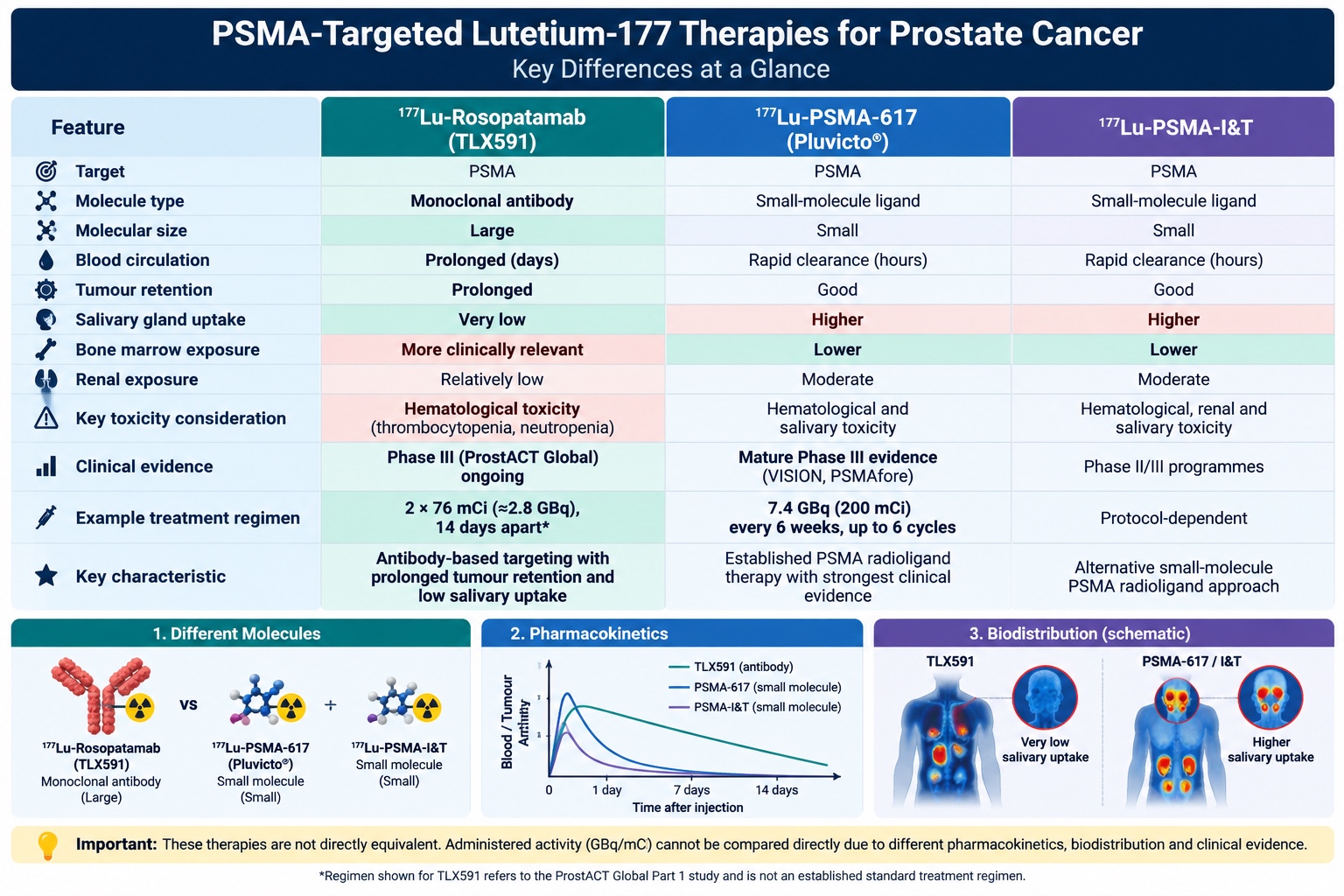
Unlike conventional small-molecule PSMA radioligand therapies, TLX591 (¹⁷⁷Lu-rosopatamab tetraxetan) uses a monoclonal antibody to target PSMA. Its prolonged circulation and tumour retention may allow sustained radiation delivery to PSMA-expressing cancer cells while producing very low salivary gland uptake.
Preliminary ProstACT Global data, however, demonstrate clinically significant haematological toxicity, particularly thrombocytopenia and neutropenia. Therefore, the potential advantages of prolonged tumour targeting must be considered alongside bone-marrow exposure.
PSMA-targeted Lutetium-177 therapies at a glanceSelect the infographic to view it at full size. The curves and organ illustrations are schematic. Qualitative exposure labels are not measurements from a head-to-head dosimetry study and do not establish comparative safety or efficacy.
What this means for patients
PSMA acts as the address on a cancer cell; the targeting molecule carries Lutetium-177 to that address. TLX591 uses a large antibody, while PSMA-617 and PSMA I&T use small molecules. Their different behaviour changes how long radiation remains in the tumour and which healthy tissues are exposed.
Low salivary uptake does not mean no dry mouth: dry mouth was reported in 25% of Part 1 patients. Small-molecule PSMA therapies can also cause clinically significant reductions in blood counts.
Bone-marrow safety matters
Sponsor-reported ProstACT Global Part 1 results included 36 patients receiving TLX591 with standard-of-care therapy.
Reported haematological events
Event
Grade 3
Grade 4
Thrombocytopenia
14%
31%
Neutropenia
22%
25%
Thrombocytopenia means low platelets, which can increase bleeding risk. Neutropenia means low neutrophils, which can increase infection risk. These small combination-treatment cohorts do not establish toxicity rates relative to other PSMA therapies.
Administered activity is not the same as absorbed radiation dose
These treatments should not be considered directly equivalent based on administered activity alone. Their pharmacokinetics, biodistribution, dosimetry and clinical evidence differ substantially. GBq or mCi describes the radioactivity administered; the absorbed dose to a tumour or organ depends on where it goes and how long it stays.
TLX591 remains under Phase III investigation, whereas ¹⁷⁷Lu-PSMA-617 has established randomised Phase III evidence, including VISION and PSMAfore. The available TLX591 data do not establish superiority to Pluvicto or PSMA I&T.
*Study regimen: the TLX591 regimen shown refers to ProstACT Global Part 1: two administrations of 76 mCi (approximately 2.8 GBq each), 14 days apart—approximately 5.6 GBq in total. It should not be interpreted as an established standard treatment regimen or converted into an equivalent Pluvicto dose.
Latest development · FDA approval · 31 July 2026
Pluvicto approved earlier in metastatic prostate cancer.
The US FDA has approved lutetium Lu 177 vipivotide tetraxetan (Pluvicto) together with an androgen receptor pathway inhibitor (ARPI) for adults with PSMA-positive metastatic androgen pathway modulation-naïve or-sensitive prostate cancer—previously known as metastatic hormone-sensitive prostate cancer.
Patients are selected using an approved PSMA PET product. The recommended regimen is 7.4 GBq every six weeks for six doses, or until disease progression or unacceptable toxicity.
Phase 3 randomised controlled trial · Published 2026
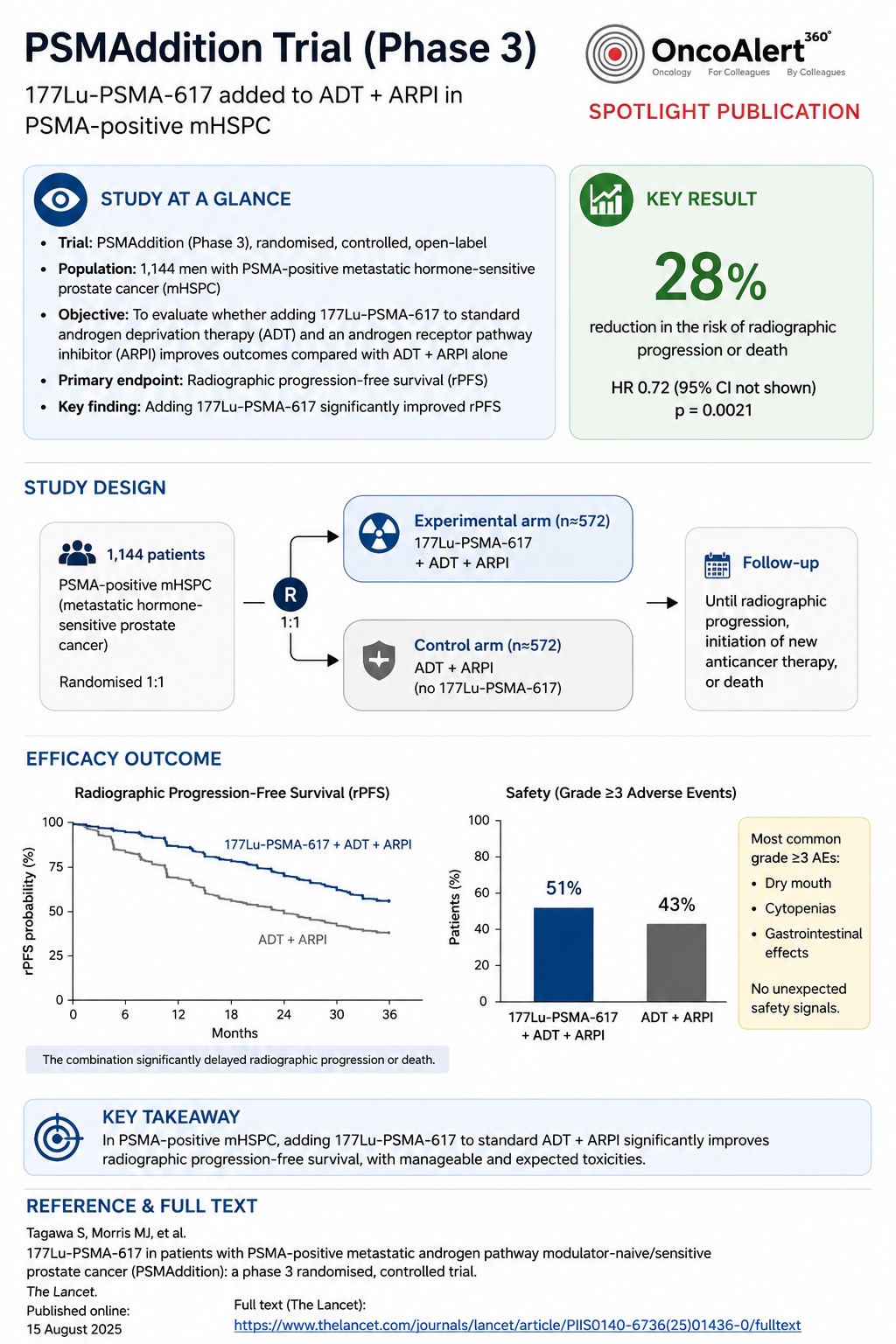
[¹⁷⁷Lu]Lu-PSMA-617 in patients with PSMA-positive metastatic androgen pathway modulator-naïve/sensitive prostate cancer (PSMAddition)
Scott T Tagawa and colleagues
1,144patients
0.72rPFS hazard ratio
p=0.0021statistically significant
Adding Lu-177 PSMA-617 to ADT plus ARPI reduced the risk of radiographic progression or death by 28%. Grade 3 or higher adverse events occurred in 51% versus 43%, with no unexpected safety signal. Overall-survival data were still immature.
PSMAddition Phase 3In PSMA-positive metastatic hormone-sensitive prostate cancer, adding Lu-177 PSMA-617 to ADT plus ARPI significantly improved radiographic progression-free survival, with a 28% relative reduction in progression or death.
Verified reference update: the footer printed within the supplied diagram shows a 2025 reference that does not resolve to PSMAddition. The verified Lancet article was published online on 6 August 2026.
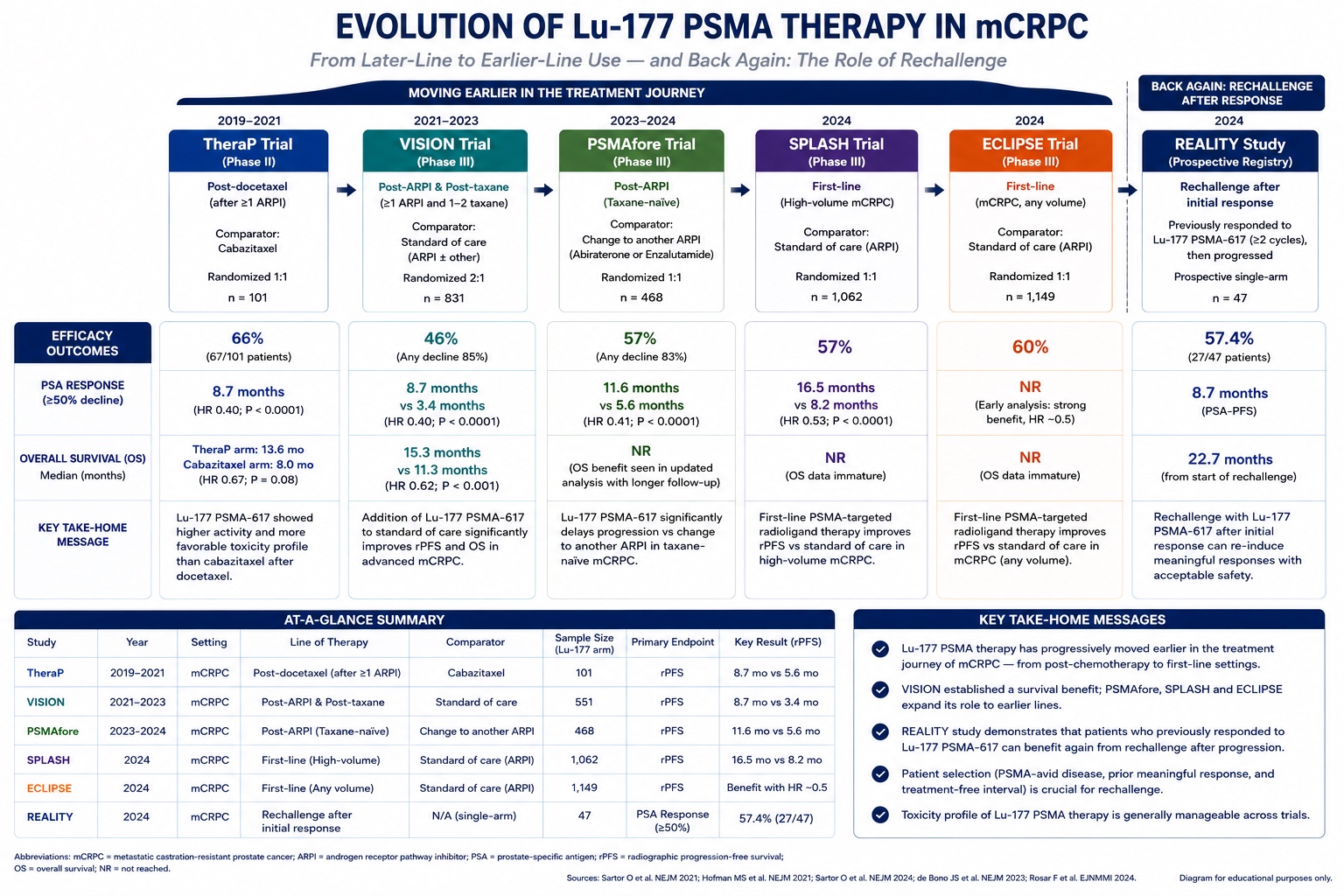
The REALITY Study examined a carefully selected group of patients with metastatic castration-resistant prostate cancer who had previously responded to Lu-177 PSMA-617, later progressed, and then received the treatment again.
47selected prior responders57.4%PSA decline of at least 50%8.7 monthsmedian PSA-based PFS22.7 monthsmedian OS from first rechallenge
Evolution of Lu-177 PSMA therapy in mCRPCThe diagram places REALITY alongside major trials that moved PSMA radioligand therapy from later-line towards earlier treatment settings.
These studies used different populations, designs and endpoints and should not be interpreted as a direct head-to-head comparison.
2020
Institut Kanser Negara
Dr Zool Hilmi initiated Lu-177 PSMA therapy at IKN, establishing access to this theranostic treatment within Malaysia's government hospital system.
2023
Thomson Hospital
The service pathway was subsequently developed in the private sector at Thomson Hospital Kota Damansara, using locally prepared Lu-177 PSMA I&T.
2027, insya-Allah
TLJCC vision
Once the planned cyclotron building is completed, TLJCC aims to develop a Nuclear Medicine Therapy Unit for services including Lu-177 PSMA and Lu-177 DOTATATE, subject to regulatory approval, licensing and operational readiness.
01
Who may benefit?
Careful selection begins with PSMA imaging.
Lu-177 PSMA therapy may be considered for appropriately selected patients with advanced prostate cancer. Assessment commonly includes a PSMA PET/CT scan to establish whether the cancer demonstrates sufficient PSMA expression.
Treatment is not automatically suitable for every patient. Previous treatments, disease distribution, symptoms, blood counts, renal function, bone-marrow reserve and the patient's overall condition must all be considered by the multidisciplinary team.
02
What happens during treatment?
Assessment, infusion and individualised follow-up.
Before treatment, the patient undergoes clinical assessment, laboratory investigations and appropriate imaging. Once suitability is established, Lu-177 PSMA is administered intravenously in a specialised Nuclear Medicine Therapy Unit under radiation-safety protocols.
The radioligand circulates through the bloodstream, binds to PSMA-expressing tumour cells and delivers therapeutic beta radiation. More than one cycle may be required, with the schedule determined individually. Follow-up may include clinical review, PSA, blood tests, renal monitoring and imaging.
A call for equitable access
Innovation matters only when patients can reach it.
Commercially manufactured Pluvicto is now available, but the reported Malaysian cost can approach RM100,000 per cycle, placing treatment beyond the means of many patients. Pricing varies and should be confirmed directly with the treating centre.
Restrictions introduced in 2026 affecting in-house Lu-177 PSMA I&T production have reduced a previously more affordable treatment pathway. Dr Zool Hilmi respectfully hopes that the Ministry of Health Malaysia will reassess the policy with regulators, clinicians, manufacturers and patient representatives—without compromising quality, radiation safety or pharmaceutical standards.
The goal is not to lower standards. It is to find a safe, regulated and sustainable pathway so eligible patients in both public and private hospitals are not denied treatment solely because of cost.
The next chapter · TLJ Cancer Centre
From seeing cancer to targeting cancer.
Tunku Laksamana Johor Cancer Centre is planning a Nuclear Medicine Therapy Unit as part of its developing nuclear medicine and cyclotron programme. Subject to completion of the facility, regulatory approvals, licensing and commissioning, the vision includes Lu-177 PSMA therapy for selected prostate cancer patients and Lu-177 DOTATATE / PRRT for selected patients with somatostatin-receptor-positive neuroendocrine tumours.
The cyclotron and nuclear medicine facility is targeted for completion in 2027, insya-Allah. The longer-term vision is to bring molecular imaging, radiopharmaceutical production and targeted radionuclide therapy together—from diagnosis to treatment.
PET/CT allows us to see cancer at the molecular level. Theranostics takes the next step.
We identify the target. We deliver treatment to the target. We evaluate the response.— Dr Zool Hilmi Awang Consultant Nuclear Medicine Physician
Medical notice: This page provides general education and professional commentary. It does not establish treatment eligibility, availability or price. Patients require individual assessment by their oncology and Nuclear Medicine teams.
Latest PRRT evidence · NETTER-2 · August 2026
Lu-177 DOTATATE moves earlier for selected neuroendocrine tumours.
A new analysis from the phase 3 NETTER-2 trial strengthens the evidence for using [¹⁷⁷Lu]Lu-DOTATATE plus long-acting octreotide as first-line treatment in carefully selected patients with newly diagnosed, advanced gastroenteropancreatic neuroendocrine tumours.
The benefit was seen in both higher grade 2 and grade 3 well-differentiated tumours, and in both pancreatic and gastrointestinal primary sites. The authors conclude that this approach can be considered when the tumour is somatostatin-receptor positive and chemotherapy is not judged to be the most appropriate first treatment.
Who this evidence applies to: well-differentiated, advanced GEP-NETs with Ki-67 from 10% to 55% and positive somatostatin-receptor imaging. These findings should not be automatically applied to poorly differentiated neuroendocrine carcinoma or to every patient with a NET.
eClinicalMedicine
Open Access · Volume 98 · Article 104109
[¹⁷⁷Lu]Lu-DOTA-TATE plus long-acting octreotide in newly diagnosed, advanced, grade 2–3 gastroenteropancreatic neuroendocrine tumours
Diego Ferone, Marianne Pavel, Ken Herrmann and colleagues
Preplanned and post-hoc efficacy analyses from the randomised phase 3 NETTER-2 trial.
eClinicalMedicine. August 2026;98:104109. doi: 10.1016/j.eclinm.2026.104109
NETTER-2 clinical trial infographicA visual summary of patient selection, the randomised study design, key efficacy findings, safety and the PRRT pathway. Tap the image to view it at full size.
The trial at a glance
From target confirmation to first-line PRRT.
NETTER-2 enrolled 226 patients across nine countries and randomised them 2:1 to Lu-177 DOTATATE plus octreotide LAR or high-dose octreotide LAR alone.
Octreotide LAR, interval imaging, blood tests and toxicity review Individualised care
PRRT arm · 151 patients
Lu-177 DOTATATE + octreotide LAR
Four 7.4 GBq cycles every 8 weeks, with octreotide LAR 30 mg, followed by octreotide LAR every 4 weeks.
VS
Control arm · 75 patients
High-dose octreotide LAR
Octreotide LAR 60 mg every 4 weeks.
Median progression-free survival
22.8months Lu-177 DOTATATEvs8.5months control
Benefit by tumour grade
0.31hazard ratio grade 2and0.27hazard ratio grade 3
Benefit by primary site
0.34hazard ratio pancreaticand0.23hazard ratio gastrointestinal
What this means in practice
For the specific NETTER-2 population, PRRT is no longer only a later-line option. It can be discussed at the beginning of the treatment pathway after confirming tumour differentiation, Ki-67, somatostatin-receptor expression, organ function and the patient's individual treatment goals. Final decisions remain multidisciplinary and patient-specific.
Medical notice: This educational summary does not replace specialist assessment. The study population and eligibility criteria matter, and treatment availability is subject to local regulatory approval, licensing and clinical resources.
PRRT outperformed everolimus in advanced, progressive GEP-NETs.
COMPETE is the first randomised phase 3 trial to show that [¹⁷⁷Lu]Lu-edotreotide can provide superior progression-free survival to an active molecularly targeted treatment, everolimus, in patients with somatostatin-receptor-positive grade 1–2 gastroenteropancreatic neuroendocrine tumours.
The open-label trial enrolled 309 patients and randomised them 2:1 to PRRT or everolimus. Most participants had already received one previous line of treatment. The benefit therefore most directly supports an earlier-line PRRT option for eligible patients with progressive disease, particularly in the second-line setting.
Clinical context matters: the study involved advanced, progressive, well-differentiated, SSTR-positive grade 1–2 GEP-NETs with Ki-67 ≤20%. The findings should not be extrapolated automatically to poorly differentiated neuroendocrine carcinoma, higher-grade disease or every patient with a NET.
United States regulatory status · 10 August 2026: ITM reported that the FDA could not approve the ITM-11 application in its present form because of chemistry, manufacturing and controls and third-party commercial-facility inspection items. According to the company, the FDA did not identify clinical efficacy, clinical safety or nonclinical concerns, and did not request additional clinical or nonclinical data. [¹⁷⁷Lu]Lu-edotreotide remains investigational and is not approved by any regulatory authority. Positive trial results and regulatory approval are separate questions. Read the ITM announcement ↗
Important verified correctionThe peer-reviewed COMPETE publication reports 2:1 randomisation, [¹⁷⁷Lu]Lu-edotreotide 7.5 ± 0.7 GBq every 3 months for up to 4 cycles, and PFS HR 0.67 (95% CI 0.48–0.95; p=0.022). Please use the verified figures in the study diagram below for clinical reference.
COMPETE trial infographicVisual supplied by Dr Zool Hilmi and displayed as requested. The verified, publication-aligned study diagram immediately below should be used for the definitive trial design and numerical results.
COMPETE study diagram
A direct comparison of PRRT and everolimus.
Three hundred and nine adults with inoperable, advanced and progressive SSTR-positive grade 1–2 GEP-NETs were enrolled across 49 centres and assigned 2:1.
7.5 ± 0.7 GBq intravenously every 3 months for up to 4 cycles, with nephroprotective amino acids.
VS
Targeted-therapy arm · 102 patients
Everolimus
10 mg orally once daily for up to 30 months or until disease progression or another stopping criterion.
Median progression-free survival
23.9months PRRTvs14.1months everolimus
HR 0.67 · 95% CI 0.48–0.95 · p=0.022
Objective response rate
22%PRRTvs4%everolimus
Blinded independent central review · p<0.0001
Grade 3–4 treatment-related adverse events
18%PRRTvs40%everolimus
The overall treatment-related toxicity profile favoured PRRT.
Clinical interpretation
COMPETE supports [¹⁷⁷Lu]Lu-edotreotide as an effective earlier-line option for eligible patients with progressive SSTR-positive grade 1–2 GEP-NETs. Overall-survival data were still immature, and interpretation is complicated by subsequent PRRT in 52% of the everolimus group. Treatment selection remains individualised and multidisciplinary.
NETTER vs COMPETE diagram
Three trials, three different clinical questions.
These are within-trial results. Differences in population, tumour grade, treatment line, comparator and radioligand mean that the numerical outcomes should not be compared directly across trials.
Feature
NETTER-12017
NETTER-22024
COMPETE2026
Main question
Is PRRT better than high-dose octreotide after progression on standard-dose SSA?
Can PRRT be used as first-line treatment in newly diagnosed, advanced higher-grade GEP-NETs?
Is PRRT superior to active targeted therapy with everolimus in progressive GEP-NETs?
Population
Progressive, inoperable or metastatic SSTR-positive midgut NET, grade 1–2
[¹⁷⁷Lu]Lu-DOTATATE 7.4 GBq every 8 weeks × 4, plus octreotide LAR
[¹⁷⁷Lu]Lu-DOTATATE 7.4 GBq every 8 weeks × 4, plus octreotide LAR
[¹⁷⁷Lu]Lu-edotreotide 7.5 ± 0.7 GBq every 3 months × up to 4; SSA permitted for symptom control
Comparator
Octreotide LAR 60 mg every 4 weeks
Octreotide LAR 60 mg every 4 weeks
Everolimus 10 mg daily
Clinical setting
After progression on standard-dose SSA
First line, within 6 months of diagnosis
Treatment-naive or after one prior line; 85% were treated in second line
Patients / allocation
229 1:1 randomisation
226 2:1 randomisation
309 2:1 randomisation
Primary PFS result
20-month PFS: 65.2% vs 10.8% HR 0.21 · p<0.001
Median PFS: 22.8 vs 8.5 months HR 0.276 · p<0.0001
Median PFS: 23.9 vs 14.1 months HR 0.67 · p=0.022
Objective response
18% vs 3%
43% vs 9%
22% vs 4%
01 · NETTER-1After SSA progression
Established PRRT superiority to high-dose octreotide in progressive midgut NETs.
→02 · NETTER-2Into first line
Moved PRRT earlier for newly diagnosed, advanced grade 2–3 GEP-NETs.
→03 · COMPETEAgainst active therapy
Demonstrated superiority to everolimus in progressive grade 1–2 GEP-NETs.
Medical notice: This specialist-reviewed educational summary is not a treatment recommendation. Eligibility for PRRT requires individual assessment of histology, tumour grade, SSTR expression, disease tempo, previous treatment, organ function and patient goals.
Patient Education
Preparing for Radioactive Iodine (I-131) Treatment
Radioactive iodine, also known as Iodine-131 or RAI, is commonly used to treat an overactive thyroid and selected patients with differentiated thyroid cancer. It is usually administered orally as a capsule or liquid.
What to expect on treatment dayThis video shows oral administration of low-dose I-131 using a shielded container and straw.
Important safety information
Please inform your medical team if you:
Are pregnant, think you may be pregnant, or are planning a pregnancy.
Are breastfeeding.
Recently had a CT scan or procedure involving iodinated contrast.
Take antithyroid medication, thyroid hormone, amiodarone, iodine-containing vitamins, supplements or traditional medicines.
Have difficulty swallowing or controlling your bladder.
Care for a baby or young child at home.
Radioactive iodine must not be given during pregnancy. Breastfeeding must be stopped before treatment and must not be restarted for the current child after I-131 therapy. Your Nuclear Medicine team will advise you on timing.
01
Preparation for hyperthyroidism
Graves' disease, toxic multinodular goitre or a toxic thyroid nodule
Complete any requested blood tests or thyroid scans before treatment.
Your doctor may ask you to temporarily stop carbimazole, methimazole or propylthiouracil. Do not stop medication unless specifically instructed.
Avoid iodine-containing supplements, seaweed products and unnecessary iodine exposure before treatment.
Follow the fasting instructions from the Nuclear Medicine Department. Plain water may usually be taken unless advised otherwise.
A pregnancy test may be required for women of childbearing potential.
A strict low-iodine diet is not routinely required for every hyperthyroidism patient. Your doctor will advise you if dietary restriction is needed.
02
Preparation for thyroid cancer
Low-iodine diet and increasing the TSH level
You may be asked to follow a low-iodine diet for approximately one to two weeks before treatment. Foods and products that may need to be avoided include:
Iodised salt and sea salt
Seafood, seaweed, kelp and fish products
Dairy products and egg yolks
Iodine-containing vitamins and supplements
Foods containing red dye number 3
Some commercially prepared foods containing iodine additives
A low-iodine diet is not the same as a no-salt diet. Non-iodised salt may be used if permitted by your medical team.
For I-131 to work effectively in thyroid cancer, TSH must be sufficiently elevated. This may be achieved by temporary thyroid hormone withdrawal or recombinant human TSH injections (Thyrogen). Do not stop levothyroxine unless instructed.
On treatment day
A quick, painless oral treatment
I-131 is given as a capsule or liquid. The iodine is absorbed into the bloodstream and selectively taken up by thyroid cells.
After treatment, you will receive personalised radiation-safety instructions. These may include temporarily limiting close contact with other people, especially pregnant women and young children. Precautions depend on the administered activity, your medical condition and your home circumstances.
Please remember: This is general information only. Medication withdrawal, fasting, dietary preparation and radiation precautions must be individually confirmed by your treating Nuclear Medicine team.
Personal imaging project · Updated 16 October 2026
Maestro DICOM Viewer
Developed by Dr Zool Hilmi Bin Awang.
Beta 1.8.2 · Under developmentLocal · Offline
Maestro DICOM Viewer is now at Beta 1.8.2. Continued training and refinement focus on more appropriate PSMA PET/CT interpretation, with the aim of reducing overdiagnosis and false-positive findings. The reporting panel now sits below the scans, giving the image viewports more room while keeping the lesion list, measurements and draft report together underneath. Maestro remains an offline beta, and every proposed finding and generated report requires physician verification.
My second imaging project is an easy-to-use anatomy reference with labelled CT and PET/CT images. Physicians can explore colour-coded structures, select anatomical systems and compare what they see on a scan with the corresponding anatomy in the atlas.
An educational project in development, with PET/CT fusion, CT soft-tissue and CT lung views.
Nuclear medicine, PET/CT and theranostics in Malaysia.
Clear, specialist-reviewed answers to common questions about molecular imaging and targeted radionuclide therapy.
Who is Dr Zool Hilmi?
Dr Zool Hilmi Bin Awang is a Malaysian Consultant Nuclear Medicine Physician and Head of Nuclear Medicine at Tunku Laksamana Johor Cancer Centre in Johor Bahru. His clinical interests include PET/CT, SPECT/CT, theranostics and targeted radionuclide therapy.
What does a nuclear medicine specialist do?
A nuclear medicine specialist uses radiopharmaceuticals for molecular imaging and targeted treatment. The specialty includes PET/CT, SPECT/CT, radioactive iodine treatment and selected theranostic therapies, with each investigation or treatment chosen according to the patient's clinical needs.
Where can I find a nuclear medicine specialist in Malaysia?
Dr Zool Hilmi is a Consultant Nuclear Medicine Physician based in Johor Bahru, Malaysia, at Tunku Laksamana Johor Cancer Centre. Patients should confirm referral requirements, clinic schedules and current service availability directly with the centre.
What is a PET/CT scan?
PET/CT combines positron emission tomography, which shows molecular or metabolic activity, with CT imaging, which shows detailed anatomy. It is commonly used in cancer assessment, treatment planning and response evaluation, although the correct tracer and protocol depend on the clinical question.
What is a PSMA PET/CT scan?
A PSMA PET/CT scan uses a PSMA-targeted radiopharmaceutical to assess prostate cancer throughout the body. It may support staging, investigation of suspected recurrence and assessment before PSMA-targeted radioligand therapy when clinically appropriate.
What is Lu-177 PSMA therapy?
Lutetium-177 PSMA therapy is a targeted radioligand treatment for selected patients with advanced prostate cancer whose disease demonstrates sufficient PSMA expression. Suitability requires specialist review of PSMA imaging, previous treatments, blood results, kidney function and bone-marrow reserve.
Is Lu-177 PSMA therapy chemotherapy?
No. Lu-177 PSMA is a radioligand therapy that carries therapeutic radiation directly to PSMA-expressing cells. It is not chemotherapy, but it may form part of a wider prostate-cancer treatment pathway planned by a multidisciplinary team.
Where was Lu-177 PSMA therapy introduced by Dr Zool Hilmi in Malaysia?
Dr Zool Hilmi initiated Lu-177 PSMA therapy at Institut Kanser Negara in 2020 and subsequently developed access in the private sector at Thomson Hospital Kota Damansara in 2023. TLJCC aims to establish a Nuclear Medicine Therapy Unit after completion of its planned cyclotron building, subject to regulatory approval and operational readiness.
How much does Lu-177 PSMA therapy cost in Malaysia?
The cost depends on the medicine, dose, hospital and treatment pathway. Commercial Pluvicto treatment in Malaysia has been reported to approach RM100,000 per cycle, but patients must obtain a current written quotation directly from the treating centre because prices and availability can change.
What is a SPECT/CT scan?
SPECT/CT combines functional imaging from a gamma-emitting radiopharmaceutical with anatomical CT images. It is used for selected bone, thyroid, cardiac, renal, infection and other nuclear medicine examinations.
What is theranostics in nuclear medicine?
Theranostics links diagnostic molecular imaging with targeted radionuclide therapy through the same or a closely related biological target. Examples include PSMA imaging followed by Lu-177 PSMA therapy and somatostatin-receptor imaging followed by peptide receptor radionuclide therapy (PRRT).
What is radioactive iodine I-131 treatment?
Radioactive iodine, or I-131, is used to treat an overactive thyroid and selected patients with differentiated thyroid cancer. Preparation, administered activity and radiation-safety precautions must be personalised by the treating Nuclear Medicine team.
How much does a PET/CT scan cost in Malaysia?
PET/CT pricing in Malaysia varies according to the radiopharmaceutical, such as FDG, PSMA or DOTATATE, the scan protocol, use of contrast and the facility. Contact the imaging centre directly for its current price, referral requirements and appointment availability.
Where is Dr Zool Hilmi based?
Dr Zool Hilmi is based at Tunku Laksamana Johor Cancer Centre, No. 77, Jalan Garuda 1, Off Jalan Cenderawasih, Larkin, 80350 Johor Bahru, Johor, Malaysia.
Professional Memberships / ENETS
Interested in Joining ENETS?
The European Neuroendocrine Tumor Society (ENETS) brings together professionals interested in neuroendocrine tumours. Its standard membership application requires a recommendation letter from an existing ENETS member, uploaded as a PDF.
If you would like to join ENETS, you are welcome to contact Dr Zool Hilmi Bin Awang for help with a recommendation letter. Please include your CV, current role and institution, and a brief explanation of your interest in neuroendocrine tumours or NET research.
Letters are considered following a review of your professional background. Membership approval remains with ENETS.
If you do not know an ENETS member, ENETS also allows you to submit a CV with your current position, NET interests and relevant publications. UKI members may submit their membership confirmation instead. Guidance checked on 11 September 2026.
Professor Richard P. Baum’s recommendation for Dr Zool Hilmi to join ENETS, following theranostic fellowship training at Zentralklinik Bad Berka in 2017. Select the letter to read it in full.
Professional memberships
Academy of Medicine MalaysiaWARMTHENETSMalaysian Medical Association
Contact
Let's connect.
For professional enquiries, collaboration and nuclear medicine services.




 WhatsApp
 Email
Email Website